
Regulation on Import Control of Toys (Product Safety and Inspection: 2026/10)
Regulation on Import Control of Toys (Product Safety and Inspection: 2026/10)
Contents
Regulation on Import Inspection of Toys (Product Safety and Inspection: 2026/10)
The Regulation on Import Inspection of Toys mandates compliance with technical regulations for imported toys before they are placed on the market, in order to protect children's health and safety. Regulation 2026/10 strengthens the risk-based inspection approach and details the application and control processes conducted through TAREKS. In this context, the Regulation on Import Inspection of Toys requires importers to submit complete technical files, test reports, and declarations of conformity.
Scope and Implementation Principles
The Regulation on Import Inspection of Toys, under 2026/10, covers all toys designed for the 0-14 age group. Inspections are carried out through document control, risk analysis, and physical examination when necessary. If samples are taken, tests are performed by an authorized and accredited TAREKS toy analysis laboratory. At the heart of the processes is the prevention of chemical and physical non-conformities that may pose risks in the market.
Regulation on Import Inspection of Toys (Product Safety and Inspection: 2026/10) Toy Analyses and Basic Tests
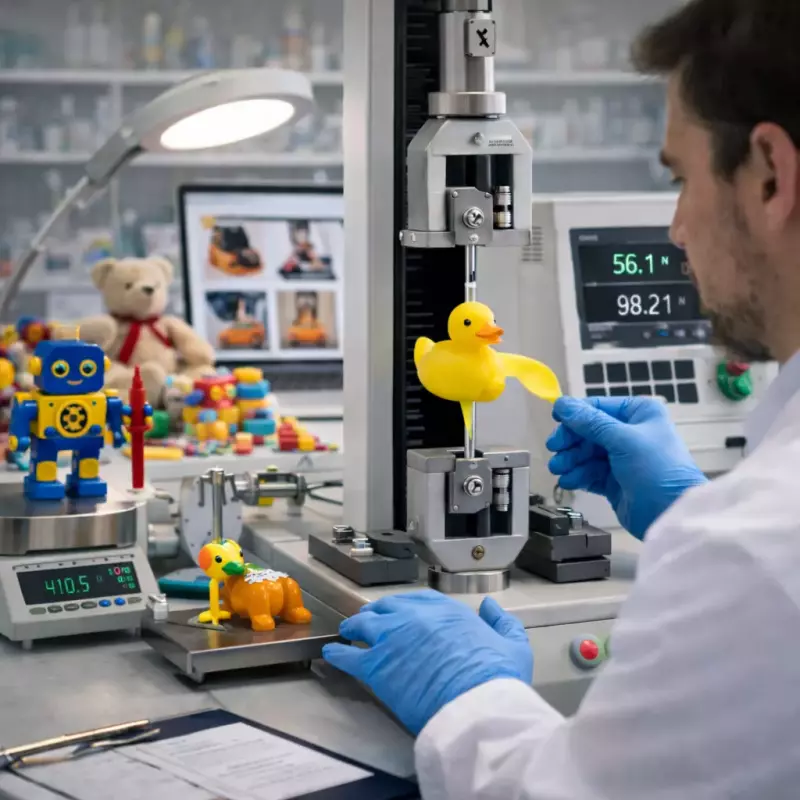
Toy analyses for pre-import conformity are multifaceted. Chemical, mechanical, and physical tests are evaluated together:
EN 71-1 (Mechanical/Physical Properties): Risks of small parts, sharp edges, breakage, and choking hazards.
EN 71-3 (Element Migration): Migration of heavy metals such as lead, cadmium, mercury, and chromium VI.
Phthalates (REACH Annex XVII): Restricted substances in PVC-based parts.
Flammability (EN 71-2): Flammability in textiles and surface coatings.
These tests are reported under the heading of toy analyses and uploaded to TAREKS.
TAREKS Process and Laboratory Selection
Applications are made electronically; document requests or sample analyses are requested according to the risk score. Sample analyses must be carried out through a TAREKS toy analysis laboratory authorized by the Ministry of Trade. Choosing the right laboratory is critical in terms of method scope, accreditation, and report validity. The Import Control Regulation for Toys clearly states that reports from unauthorized laboratories will not be accepted.
TTS Laboratory Services provides services as an accredited and authorized laboratory.
Age Classification: Toys, due to their design and some features, may be suitable for children under 36 months, and due to other features, for children over 36 months. Therefore, when classifying by age group, the issue of whether the toy can be used as intended by children under 36 months should be taken into account.
Evaluation of Toys for Children Under 36 Months
When determining the play value of a toy for children under 36 months, the following points are considered:
• Psychological characteristics of children under 3 years of age, especially their need for "hugging,"
• Children's interest in objects that resemble them (dolls, toddlers, baby animals, etc.), • Their tendency to imitate adults and their behavior,
• Their level of mental development; • Lack of abstract thinking capacity, low level of knowledge, and limited patience,
• Their physical abilities (movement, dexterity, etc.) are not yet fully developed, and the toy should be easily controllable by hand for children in this age group.
Considerations for Age Group Classification
The following points should be observed in age group classification assessments:
• The basis for deciding whether a toy is suitable for children under or over 36 months is the child's ability to use the toy as intended. If this use begins before 36 months and continues after this age, the toy should be considered suitable for children under 36 months as well.
• The presence of small parts that can be swallowed or inhaled, or a risk of choking, should not, in itself, be interpreted as meaning that the toy is suitable for children over 36 months.
• The phrases “Not suitable for children under 36 months” or “Not suitable for children under three years old” on the toy cannot be used as a justification to indicate that the toy is intended for children over 36 months. Therefore, these warnings should not be present on toys that meet the criteria for being intended for children under 36 months and also pose a risk to this age group.
Technical File and Conformity Requirements
The importer submits the product description, risk analysis, test reports, and declaration of conformity in the technical file. Test results must be expressed with clear limits (mg/kg, mg/kg migration, etc.) within the scope of toy analyses. Consistency in the documents directly affects the evaluation time. All relevant reports must be prepared by a Tareks toy analysis laboratory.
Frequently Encountered Nonconformities During Inspection
Heavy metal migration limit exceedance
Violation of phthalate restrictions
Lack of labeling and age warning
Insufficient mechanical strength
Toy analyses performed under these headings identify nonconformities.
Contact Informations
